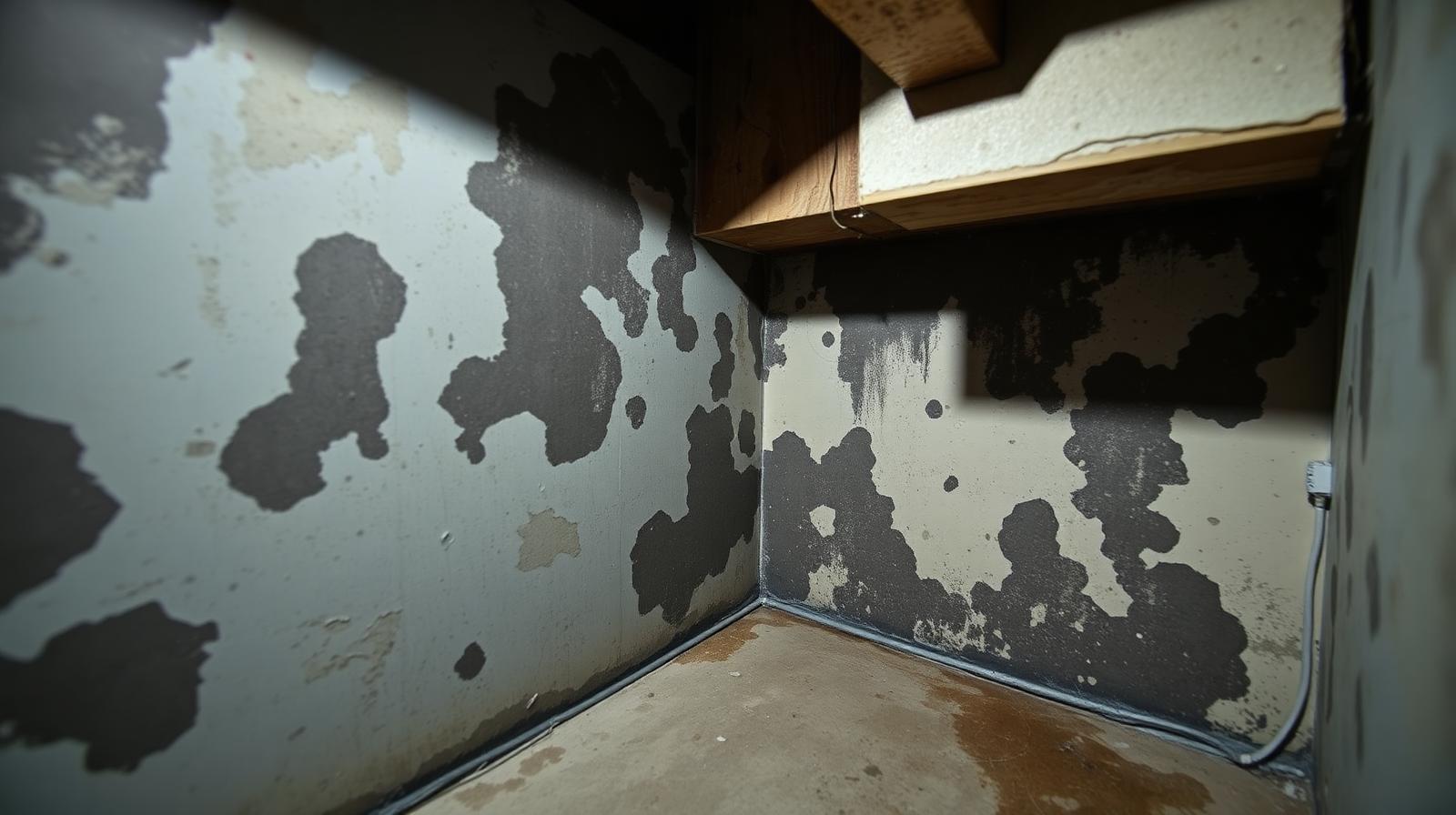
Mold shows up in a lot of Ontario homes, especially older ones and anything with a basement that has ever taken on water. The right answer for selling depends on the type of mold, the source, and how much time you want to spend on remediation. This guide walks through your options.
Figure out what you actually have
Not all mold is equal. Roughly:
- Surface mold. A patch on bathroom grout or a corner of the ceiling. Usually cosmetic and fixable with cleaning plus better ventilation.
- Hidden mold behind finishes. Drywall discoloration, musty smell, warped baseboards. Usually means moisture behind the wall, and remediation requires opening things up.
- Structural mold. Extensive coverage in a basement, crawl space, or attic. Often tied to a failed foundation, chronic roof leak, or long-term humidity issue.
- Health-code mold (Stachybotrys / black mold). Requires professional remediation regardless of extent. Common insurance and lender flag.
A mold inspection by an IICRC-certified remediation firm costs $300 to $700 and gives you a scope of the problem, root-cause assessment, and a remediation quote. Worth it before deciding whether to remediate or sell as-is.
Should you remediate before selling?
Remediation makes sense when:
- The moisture source is straightforward and cheap to fix (cracked caulk, poor ventilation)
- Remediation cost is under 10% of the home's expected sale value
- You have the cash flow to front the cost and the time to wait 2 to 8 weeks for work to complete
- You want to open the home to retail buyers with financing
Selling as-is makes sense when:
- The moisture source is major (foundation, structural roof, chronic groundwater)
- Remediation quotes total more than $15,000 and you would rather move on
- The home has other issues stacking up (see also Selling a House That Needs Repairs in Ontario)
- You need to close quickly (relocation, financial pressure, estate)
Disclosure rules in Ontario
Ontario is a caveat emptor province, but courts have consistently held that sellers cannot conceal known latent defects, and hidden mold that affects habitability is a textbook latent defect. Disclosure protects you:
- Visible mold you know about
- Past mold you remediated (include the remediation report if you have it)
- Water damage, leaks, or flooding events even if no mold appeared
- Any professional mold inspections and their findings
Write it into the Agreement of Purchase and Sale as a specific representation. If you use a Seller Property Information Statement (SPIS), fill it in truthfully. Skipping this is the fastest way to end up defending a lawsuit two years after closing.
Why financing gets tricky
When a home inspector or appraiser notes mold, most conventional lenders will either require remediation before closing (with proof from a remediation company) or refuse to fund. That kicks financed retail buyers out of the pool. What is left:
- Cash buyers
- Investors using private lending (higher rates, less appraisal sensitivity)
- Buyers with large down payments and lenders willing to take on the risk (rare)
This is why homes with mold that get listed on MLS often sit for months, take multiple price cuts, and end up selling to an investor anyway, at a lower price than a direct sale would have produced from day one.
What as-is offers usually look like
| Mold situation | What a cash offer usually looks like |
|---|---|
| Surface only, easy fix | Modest discount to clean market value |
| Contained, one area, no structural cause | Meaningful discount to cover remediation and buyer risk |
| Structural, active moisture source | Substantial discount, buyer absorbs full remediation and unknowns |
| Whole-home / severe / health code | Deep discount, closer to land plus shell value |
Every home is different. A serious buyer will do a walkthrough, sometimes with their own inspector, then deliver a written offer within a day or two.
Have mold and not sure what to do?
Share a few details about the property. If a direct sale is the right fit, we will schedule a walkthrough. If remediation is a better path, we will say so.
Frequently asked questions
Can I sell a house with mold in Ontario?
Yes. Mold does not stop a sale, but it narrows your buyer pool. Cash buyers and investors purchase homes with active mold regularly. Retail buyers with financing often walk away because their lender or insurer will flag the remediation requirement.
Do I have to disclose mold when selling?
Yes if it is known and material. Visible mold in living areas, past mold that was remediated, and any known moisture source (leaking roof, cracked foundation, failed sump) should be disclosed in writing. Concealing known mold is one of the most common causes of post-closing lawsuits in Ontario.
How much does mold remediation cost in Ontario?
Small surface mold in a bathroom or corner might cost $500 to $2,000. Mold behind drywall or in insulation typically runs $3,000 to $15,000. Whole-basement remediation with drywall removal, HEPA cleaning, and moisture-source repair often reaches $15,000 to $40,000. Add another $5,000 to $20,000 if the underlying moisture problem (foundation, roof, plumbing) has to be fixed.
Will insurance cover mold remediation?
Usually no. Most Ontario home insurance policies exclude mold that develops over time from ongoing moisture. Coverage may apply if the mold results from a covered sudden event like a burst pipe, and you filed the claim promptly. Check your policy wording before assuming.
How much does mold reduce a home's value?
Cosmetic mold in a bathroom often has zero effect if noted and priced in. Structural mold in a basement or walls pulls the number down meaningfully, because the buyer will subtract expected remediation cost and price in the risk of hidden damage. In practice, an as-is cash offer on a home with significant mold lands well below clean market value, usually in the 65% to 75% range once remediation, risk, and time are accounted for. No cash buyer is paying top dollar on a mold home.
Thinking of skipping the listing process?
Share a few details about your Ontario property and we will come back with a no-obligation offer.